This blog is a part of my body of research that seeks to analyse civil society's and academia's understanding of national security models from an academic perspective with a focus on Canada, Israel and the UK.
Showing posts with label Foreign Affairs Trade and Development Canada. Show all posts
Showing posts with label Foreign Affairs Trade and Development Canada. Show all posts
June 5, 2015 - Ottawa, Ontario - Foreign Affairs, Trade and Development Canada
The Honourable Rob Nicholson, P.C., Q.C., M.P. for Niagara Falls, Minister of Foreign Affairs, today announced the following diplomatic appointments: Rosemary McCarney becomes Ambassador and Permanent Representative of Canada to the Office of the United Nations and to the United Nations Conference on Disarmament in Geneva. Pierre Giroux becomes High Commissioner to the Co-operative Republic of Guyana. Vincent Le Pape becomes Ambassador to Burkina Faso.
Today, the Government of Canada launched the “Join the Fight against Ebola” campaign to help recruit Canadian healthcare workers. Learn about how you can join the fight here http://bit.ly/phacfnov27ebr1
Engaging Women as Economic Citizens in Developing Countries
Never underestimate the progress and the decisions that can be made when a group of women get together. Many women would agree that one of the things women share worldwide is a love of getting together to share their stories and life experiences, personal and professional. It was on this premise that UN Women, with the support of Canada, agreed at the Conference on Women's Economic Empowerment in 2011, to develop a digital hub, the Knowledge Gateway, so that women (and men) worldwide active in empowering women would have a virtual platform to share their experiences and expertise.
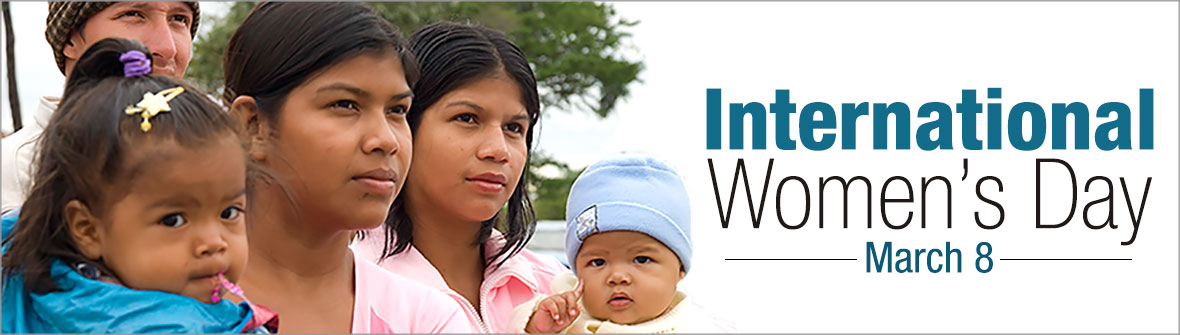
With this year's International Women's Day upon us on March 8, 2014, women and men worldwide will gather to celebrate achievements, note the conditions and contemplate how to improve the circumstances for women, especially for those who live in developing countries. This year the United Nations is asking people to reflect upon the theme, "Equality for women is progress for all."
Research supports what many people already know: involving women in the economic life of a country reduces poverty and improves the economic stability of a country. Focusing on how to improve the circumstances for women and girls in developing countries will help facilitate gender equality in health, education, employment and entrepreneurship. The facts about the status of women in developing countries show that there is still much work to be done:
More women than men live in poverty
Worldwide, women account for 58 percent of unpaid employment
Women make up more than half of the world"s illiterate people
More boys that girls attend secondary school
Educated women are likely to marry later, having smaller and healthier families
Fewer women assume decision-making roles at home, in business or on a political level
A global connection
To lift themselves out of poverty, women—and the organizations that support them—must learn about and understand the opportunities before them so they can work to achieve a more equitable and prosperous way of life. Wanting to empower women and help them achieve these goals, UN Women, working closely with Canada, launched the Knowledge Gateway in September 2013.
A dynamic, global platform designed to invest in women's equality and economic empowerment, the Knowledge Gateway brings people together from around the world to share experiences and expertise, discuss business ideas and take advantage of learning opportunities. The platform is a meeting place for individuals from developing and developed countries, engaging large international organizations and grassroots networks.
There are four main components of the Knowledge Gateway:
The Knowledge Library provides users access to current research, data and information about successful policies and best practices.
Through the Knowledge Network members can connect with leaders and peers, engage in partnerships and communicate about areas of interest to increase women's economic empowerment.
The Knowledge Circles offers users an area for more informal exchange so people can ask questions, engage in online discussions, and receive mentoring and support for their projects and ideas.
Through the Learning Centre members can take online courses and attend webinars to learn about concepts such as how prepare a business plan, implement a marketing strategy, get a job and negotiate a salary, or more specifically in thematic areas that include policy, employment, workplace, entrepreneurship, resources, agriculture, energy and the environment, leadership and data/statistics.
By the numbers
These days, a simple Internet connection can facilitate the gathering of a global community where individuals, governments, civil society and other organizations can ask questions, attend workshops and share information. Telling people about the Gateway and encouraging them to use it, will help in the success of the project. Some of the early indicators of the interest in the Knowledge Gateway can be determined by the number of people coming to the "virtual table."
Five months in, these numbers give a sense of the project's early reach:
35,000 visitors from 100 different countries have stopped by
1,640 registered users have downloaded nearly 700 publications and more than 180 resources and how-to guides
150 discussion threads allow users to ask and answer questions and share experiences and lessons learned
3,500 subscribers follow the social media outreach
On a personal note
Keeping it personal is the quest of the Knowledge Gateway champions. Announced on December 3, 2013, the 29 community champions came on board to further women's economic empowerment in their communities.
Everyday people from the different countries and walks of life were brought on board because of their passion for women's economic empowerment and their interest to raise awareness, using traditional and social media channels. Launched by a 24-hour Tweetathon, the purpose was to use existing networks to keep the conversation going, adding new people and ideas along the way.
Changing times
The internet has made the world a smaller place. Logging on to platforms such as the Knowledge Gateway opens the door for citizens, civic actors and governments to connect with others in a true global digital space. Open dialogue, sharing experiences and giving people a voice can bring about positive change to support women's economic empowerment around the world. With support for projects such as this one, Canada is active in finding new ways to reach out, engage and solve problems to improve the lives and circumstances of people in need.
Knowledge Gateway Champions Testimonials:
Quotes
"My decision to become a community champion was based on the desire to make a contribution to creating and developing the world with equal opportunities for women and men, no gender discrimination and no violence, with fulfillment of women's rights. I wanted to know how and what I am able to do for women in my own country. Knowledge Gateway is a great informational resource, it is also an educational platform, and I believe that awareness-raising can become a key instrument of improving women's live. Now each of us is a part of global process of women's empowerment. It is a great feeling of being inspired and to become an inspiration for others."
- Anna Bolbasova (Female, Belarus)
"I made the decision to become a champion for women's economic empowerment for a myriad of reasons, but chiefly, I believe it should be a focal point for everyone. By addressing the economic plight of women, we can positively affect not only their lives, but also those who depend on women for sustenance and care-giving. I grew up in a third world country, specifically Jamaica, and the doomsday reality of matriarchal families who constantly bob below the poverty line was painted on most doorposts across the country. For me, being a UN Knowledge Gateway Champion for women's economic empowerment was the perfect way to advocate and facilitate dialogue."
- Kavelle Christie (Female, Jamaica)
"Very often, people in many countries fail to recognize the importance of Women in our lives and discourage them and do not allow them to rise. My motive for joining Knowledge Gateway is to understand not only the problems faced by Women in India but also in other countries and what solutions are being implemented by them. Till now, Knowledge Gateway has been a very good journey and interacting with different people and sharing knowledge has been fruitful. I am sure this long lasting bond will continue and we will keep making difference in lives of women all over the world no matter which part of the country we live."
- Vikram Simhan (Male, India)
"I became a community champion to get the attention of the UN and policymakers. It is important that women have a better and equal future to look forward and they are treated as first-class citizens."
- Poh Ching (Female, Singapore)
Baird Promotes Territorial Integrity and National Unity in Ukraine
February 28, 2014 - Foreign Affairs Minister John Baird today wrapped up a successful mission to Ukraine, where he and the Canadian delegation of parliamentarians and representatives of the Ukrainian community met with key members of the new government. Baird met with acting president Oleksander Turchynov, Prime Minister Arseniy Yatsenyuk, acting foreign minister Andriy Deschytsya, Ukrainian Democratic Alliance for Reform leader Vitali Klitschko, All-Ukrainian Union Svoboda leader Oleh Tyahnybok, Chair of the Canada-Ukraine Parliamentary Group Volodymyr Polochaninov, former prime minister Yulia Tymoshenko, as well as other opposition and civil society members. He also met with the major organizers of Maidan civil society, representatives from Ukraine's religious communities including Crimean Tatars, and visited the medical centre at St. Michael's Monastery, where he announced increased financial support for providing medical care to injured protesters. Members of the Canadian delegation walked through the Maidan and paid their respects to the fallen protesters who died for the cause of democracy. "Their sacrifice in the defence of their democracy and freedom has brought change to this country," said Baird. "They will not be forgotten." Baird congratulated the new government and emphasized the need to honour the 1994 Budapest Declaration's commitment to Ukraine's territorial sovereignty and national unity at this critical time. He also reiterated Canada's support for Ukraine and its efforts to rebuild the country, including through the International Monetary Fund, following the instability and violence of the last 100 days. Many of his meetings featured discussions on ways to reduce corruption, combat money laundering and manage the financial transition. "Canada remains committed to working in concert with our allies to develop a plan to assist Ukraine's economic and democratic future," said Baird. The Canadian delegation consisted of Ted Opitz, Member of Parliament for Etobicoke Centre; James Bezan, Member of Parliament for Selkirk—Interlake; Senator Raynell Andreychuk; Victor Hetmanczuk, President and CEO, Canada-Ukraine Foundation; Paul Grod, President, Ukrainian Canadian Congress (UCC); Taras Zalusky, Executive Director, UCC; and Krystina Waler, board member, Ukrainian Canadian Professionals and Business Association. For further information and photos, please visit Canada's Response to the Situation in Ukraine.
- 30 -
For further information, media representatives may contact: Media Relations Office Foreign Affairs, Trade and Development Canada 613-995-1874media@international.gc.ca Follow us on Twitter: @DFATDCanada
Minister Yelich leads first trade mission to Iraq in 25 years February 13, 2014 - The Honourable Lynne Yelich, Minister of State (Foreign Affairs and Consular), demonstrated Canada’s strong commitment to supporting Iraq’s democratic development by supporting an unprecedented four-day visit to the cities of Basra, Baghdad and Erbil. While in Iraq, Minister Yelich also opened a Canadian Trade Representation Office in Erbil. This was Canada’s first trade mission to Iraq in 25 years.
“Canada is expanding its presence in Iraq to support Iraqis in their efforts to build a brighter future,” said Minister Yelich. “Canada wants to help Iraq rebuild its infrastructure, develop its natural resources and create wealth for its citizens. Only by creating economic opportunity for all will Iraq regain political and social stability.”
In Baghdad, Minister Yelich delivered remarks at the first Conference on Canada-Iraq Commercial Relations, and in Erbil she spoke to the first Conference on Canada-Kurdistan Commercial Relations. These conferences brought together business leaders from Canadian companies and local Iraqi business representatives wanting to conduct business in Canada or with Canadians. The trade mission, organized by the Canada-Arab Business Council, primarily comprised companies in the oil and gas and infrastructure sectors.
During this trade mission, Minister Yelich met with Prime Minister Nouri al-Maliki, Vice-President Khodair al-Khozaei, Minister of Foreign Affairs Hoshyar Zebari, Basra Governor Majid Al-Nasrawi, and President of the Iraqi Kurdistan Region Massoud Barzani. She confirmed Canada’s resolve to support Iraq’s efforts in reconstruction and combatting terrorism. She also reiterated Canada’s commitment to supporting the Iraqi people in their ongoing efforts to build democracy and pluralistic federalism, including the important elections on April 30.
Minister Yelich also thanked the authorities in Iraq and Iraqi Kurdistan for their generosity in hosting Syrian refugees and promised continued Canadian support. Canada’s assistance in response to the Syrian crisis encompasses $353.5 million in humanitarian assistance and $210.6 million in development assistance to refugee-hosting countries, including $8.8 million to Iraq.
In addition, the Minister met with Sami Al-Araji, Chair of the National Investment Commission, to discuss how to work together to break the perceptions on challenges in Iraq so businesses in Canada can better take advantage of the country’s booming economy. Through their leadership and leading-edge technologies, Canadian investors promote sustainable development and responsible business practices in countries around the world.
Reconstruction efforts in Iraq will continue to create significant business opportunities for Canadian companies, which have become increasingly involved in the infrastructure, transportation, agriculture, housing and power generation sectors.
As part of the Government of Canada’s commitment to expanding engagement with a key regional player, Canada reopened its diplomatic mission in Baghdad in April 2013. Canada’s new Trade Representation Office in Erbil is responsible for trade with all of Iraq and will serve as a gateway for expanding dialogue between Canada and Iraqi Kurdistan—an important part of Canada’s re-engagement with Iraq.
“A secure, stable and democratic Iraq is essential for regional peace and prosperity,” said Minister Yelich. “Canada is increasing its presence in Iraq at a critical period in the country’s transition to democracy.”
- 30 -
For further information, media representatives may contact:
Saro Khatchadourian Press Secretary Office of the Minister of State (Foreign Affairs and Consular) 613-944-2300 Saro.Khatchadourian@international.gc.ca
Media Relations Office Foreign Affairs, Trade and Development Canada 613-995-1874 media@international.gc.ca Follow us on Twitter: @Canada_Trade
Canada's Action Plan for the Implementation of United Nations Security Council Resolutions on Women, Peace and Security
Purpose:
This Action Plan is intended to guide the Government of Canada in the implementation of a group of United Nations Security Council Resolutions (SCRs) on Women, Peace and Security which recognize and address the experiences of women and girls in conflict and post-conflict situations, and to improve Canada's capacity to safeguard and support affected populations during all phases of peace operations (peacekeeping, peacebuilding, peacemaking, peace enforcement, conflict prevention, mediation, and stabilization and reconstruction), and in fragile states and conflict-affected situations.
Canada regards full implementation of these resolutions as an important means of contributing to the full realization of human rights, peace and security by increasing, over the long term, the effectiveness of responses by the international community to conflict situations or cases of acute fragility, and thereby building peace that respects the fundamental equality of men and women.
The active and meaningful participation of women and girls at all stages of international interventions will result in improved program and project effectiveness and sustainability at the local, national and international levels. This includes ensuring a diverse range of women have an equal opportunity to engage directly in the development of proposed interventions and to assess the impact of proposed interventions on them. This approach is a fundamental part of effective and accountable peace operations and engagements in fragile states and as such is neither optional nor incremental, and must be built into all stages of the design and delivery of programs.
The Multilateral Context
UNSC Resolution 1325 (2000) on Women, Peace and Security was the first such instrument to deal exclusively with women in situations of armed conflict. It affirms that women’s participation and the inclusion of concerns regarding the substantive equality of men and women at all stages of peace operations, are integral to the development of stable states built on a foundation of human rights and the rule of law. The Resolution calls for special consideration, during and after conflict, of the differential impact of conflict on women and girls.
Resolution 1325 requests UN Member States, within the context of conflict, to address several key themes: prevention of conflict and of violence against women, protection of women’s and girls’ human rights; representation and participation of women and local women’s groups; training of deployed personnel (national and international) to encourage their use of an approach that considers, incorporates and adequately addresses the needs and capacities of women and girls in their field and headquarters responsibilities; and integration of an approach fully reflecting the equality of men and women in all aspects of peace and security activities. The UN Secretary-General subsequently requested Member States to develop their own national implementation plans for Resolution 1325 in order to support and strengthen UN policy and operational mechanisms.
Resolution 1820, adopted in 2008, explicitly identifies sexual violence as a tactic of war and as a threat to international peace and security, providing the Security Council with a clear mandate to intervene and impose sanctions where appropriate. This Resolution also condemns the use of rape and other forms of sexual violence, stating that rape can constitute a war crime, a crime against humanity, or a constitutive act with respect to genocide. It identifies a need to exclude sexual violence from amnesty provisions in conflict resolution processes and calls upon UN Member States to prosecute persons responsible for sexual violence, and to ensure that all victims of sexual violence have equal protection under the law and access to justice. Furthermore, it encourages troop and police contributing countries to, among other things, deploy a higher percentage of women peacekeepers and police, as a strategy to prevent sexual violence against women and girls in conflict and post-conflict situations.
Resolution 1888, adopted in 2009, provides for stronger tools in implementing 1820, including by specifically mandating peacekeeping missions to protect women and children from rampant sexual violence during armed conflict. It also asked the Secretary-General to appoint a special representative to coordinate a range of UN mechanisms to fight these crimes.
Finally, Resolution 1889, also adopted in 2009, reaffirms Resolution 1325, and calls for a set of global indicators for the implementation of Resolution 1325, as well as a report on gender and peace building. Resolution 1889 urges greater participation by women in peacemaking and post-conflict recovery, and makes recommendations for a UNSC mechanism for monitoring.
In 2010, in response to Resolution 1889, the Secretary-General proposed specific performance indicators to the Security Council, providing a new and essential dimension of accountability to the implementation of Resolution 1325. While these indicators are not all applicable to the national efforts of all Member States, they offer inspiration for the identification of specific and measurable ways in which Member States can monitor their own performance.
To date, some 18 countries, including states emerging from conflict, have established National Action Plans on the Women, Peace and Security Resolutions or have made substantial progress in the development of such Plans. Multilateral actors and institutions are also taking action on Women, Peace and Security issues. For example, a joint directive from the two Strategic Commands of the North Atlantic Treaty Organization (NATO) in September 2009 sets out clear parameters for implementation of SCR 1325 through training, staffing, standards of behaviour, reporting and a range of operationally-relevant issues under the aegis of Women, Peace and Security. The African Union, meanwhile, addresses such issues in its Solemn Declaration on Gender Equality in Africa.
Cumulatively, these resolutions form a framework that recognizes as international peace and security issues the interrelation of women’s equality, human rights, and women’s participation, and the specific roles and responsibilities of women and men as shaped by their communities. Further, this group of resolutions represents a strong foundation upon which UN member states can plan, implement and evaluate how their activities respond to the Resolutions.
Canada’s Approach
In keeping with its core values of freedom, democracy, human rights and the rule of law, Canada is committed to the effective implementation of the UNSC Women, Peace and Security Resolutions. In line with this commitment, Canada further reaffirms the importance of implementing the international agendas and Resolutions on the protection of civilians and on children and armed conflict (including those measures intended to make perpetrators of grave violations against children in conflict situations more accountable). Canada’s efforts to implement the Women, Peace and Security Resolutions are also linked to the overall promotion and protection of women’s and girls’ human rights and equality within the framework of the 1995 Beijing Declaration and Platform for Action, and Canada’s obligations under the Convention on the Elimination of All Forms of Discrimination against Women, the Convention on the Rights of the Child, and other international human rights instruments.
Canada regards the Women, Peace and Security Resolutions as identifying major and enduring issues in the conduct of international peace and security. Both the letter and the spirit of these Resolutions are fully consistent with Canada’s approach to promoting equality between men and women and ensuring that the differential impact of conflict on women and girls is recognized and addressed within peace and security policies and programming. Systematic integration of the concerns and experiences of women and men, boys and girls is seen as essential to ensuring equality. In the realm of peace operations, fragile states and conflict-affected situations, the purpose of this approach is to make missions more effective and to reinforce the Government’s consistent emphasis on accountability.
Canada’s approach to equality recognizes the patterns of disadvantage that many women and girls face and requires that they be taken into account. This approach also examines the impact of laws, policies and programs within their surrounding social context to examine how they can provide equal benefit and promote the active and meaningful participation of everyone. The intent is to conduct analyses and set in motion policies at the national and international level that address disparity between women and men.
Canada’s approach is oriented to empowering women and girls by creating and reinforcing systems and structures that enable equality between men and women, and among women and girls of different status in their communities. In peace operations or fragile states this could mean, for example, the deliberate engagement of women, including indigenous women, in bodies that are able to make binding decisions, or indeed the devolution of decision making authority to existing venues, statutory and non-statutory, where women historically have enjoyed greater influence. As noted in the Implementation Framework below, it is crucial to recognize both the needs and capacities of women and girls affected by conflict, drawing upon their knowledge and skills to craft and implement effective policies and projects.
Canada’s approach will be pursued on a variety of fronts including, as appropriate, through advancing international norms and standards, conducting sustained advocacy on a bilateral and multilateral basis; seeking mechanisms for accountability and implementation; engaging Canadian, international and local civil society organizations; and building knowledge and skills for practitioners. These approaches are intended to be mutually reinforcing and will take place at both the policy and operational levels, nationally and internationally.
Canada’s Action Plan:
Implementation Framework
Canada’s Action Plan provides a framework for a cohesive whole-of-government approach that will support Canadian and UN efforts to implement the UNSC Resolutions on Women, Peace and Security. Foreign Affairs and International Trade Canada (DFAIT), the Department of National Defence (DND), the Canadian International Development Agency (CIDA), the Royal Canadian Mounted Police (RCMP), Public Safety Canada, Status of Women Canada and Justice Canada, as well as members of Canadian civil society, have all contributed to the development of the Action Plan. Canada also works with Member States of the UN, regional and other international organizations, and civil society organizations and networks to advance the integration of the specific concerns of women and girls and the substantive equality of men and women throughout its foreign policy and diplomacy, development, humanitarian assistance, defence and security activities.
Canada’s Action Plan is organized into thematic areas that reflect the content of the SCRs on Women, Peace and Security and the structure of the Report of the Secretary-General on Women, Peace and Security (S/2010/173) which presents a set of indicators to the Security Council:
Prevention – integrating a perspective that takes into account the differential experiences of men and women, boys and girls in conflict situations into all conflict prevention activities and strategies; strengthening efforts to prevent violence, including sexual violence, against women and girls in peace operations, fragile states and conflict-affected situations.
Participation – advocating for the active and meaningful participation and representation of women and local women’s groups in peace and security activities, including peace processes.
Protection -- protecting women’s and girls’ human rights by helping to ensure their safety, physical and mental health, well-being, economic security, and equality; promoting and protecting the security and rights of women and girls; protecting women and girls from violence, including sexual violence.
Relief and recovery – promoting and working to ensure women’s equal access to humanitarian and development assistance, promoting aid services that support the specific needs and capacities of women and girls in all relief and recovery efforts.
Throughout the thematic areas, the Action Plan includes key strategies for the implementation of the UNSC Women, Peace and Security Resolutions:
Training of personnel with a view to shaping current responses and creating longer-term attitudinal change in order to develop an approach to their responsibilities which takes into account the differential experiences of women and men, girls and boys.
Assessing the implication for women and men, girls and boys of any planned action associated with peace operations, fragile states and conflict-affected situations, including legislation, policies or programs in all areas and at all levels, supported as appropriate by the timely collection of sex- and age- disaggregated data.
Developing and promoting policy and program approaches that effectively respond to the differential experiences of women and girls in peace operations, fragile states and conflict-affected situations.
Putting in place mechanisms that promote departmental accountability for implementing the Action Plan.
Objectives
In regard to peace operations and engagement in fragile states and conflict-affected situations as intended by the SCRs on Women, Peace and Security, the Government of Canada commits to:
Increasing the active and meaningful participation of women, including indigenous and local women, in peace operations and peace processes, in the management of conflict situations, and in decision making in all of these areas.
Increasing the effectiveness of peace operations, including the protection and promotion of the rights and safety of women and girls.
Improving the capacity of Canadian personnel to help prevent violence and to contribute to protecting the human rights of women and girls in the context of peace operations, fragile states, conflict-affected situations and in humanitarian crises or relief and recovery operations.
Promoting and supporting relief and recovery efforts in fragile states and conflict-affected countries in a manner which takes into account the differential experiences of women and men, boys and girls.
Making the leadership of peace operations more accountable for carrying out their mandated responsibilities by realizing, to the maximum extent practicable, the intent of the SCR’s on Women, Peace and Security.
In order to achieve these commitments, Canada will take clear, deliberate and sustained action in each of the four thematic areas of the SCRs on Women, Peace and Security, including through the development and adoption of best practices and the application of lessons learned arising progressively from implementation of the Action Plan. To support compliance with and implementation of the goals set out in this document, a series of indicators are used in this Action Plan. They are inspired by the indicators presented by the UN Secretary General in a report to the Security Council (S/2010/173) in April 2010 and follow the same principle of being SMART — Specific, Measurable, Achievable, Relevant and Time-bound. While some actions such as multilateral advocacy do not lend themselves to ready indicators above the output level, it is important to identify all areas of intended action.
Actions and Indicators
Prevention:
Ensure that all organizations receiving Government of Canada funds for humanitarian assistance have organizational codes of conduct relating to sexual exploitation and abuse consistent with the core principles of the Inter-Agency Standing Committee (IASC) Plan of Action on Protection from Sexual Exploitation and Abuse in Humanitarian Crises.
Indicator 1-1: Number and percentage of organizations receiving Government of Canada funding for humanitarian assistance that have organizational codes of conduct relating to sexual exploitation and abuse consistent with the core principles of the Inter-Agency Standing Committee (IASC) Plan of Action on Protection from Sexual Exploitation and Abuse in Humanitarian Crises.
Systematically include modules on women, peace and security, including codes of conduct, cultural awareness, HIV/AIDS, trafficking in persons, and Canadian and international law applicable to the human rights and protection of women and girls in all Canadian training for military, police and civilian personnel being deployed operationally, in a manner which addresses any differential impact of armed conflict on women and girls.
Indicator 2-1: Percentage of Government of Canada departmental pre-deployment or general training courses, including courses taken while deployed on mission, for peace operations, fragile states or conflict-affected situations that examine the differential impact of armed conflict on women and girls and address key issues such as codes of conduct, cultural awareness, HIV/AIDS, trafficking in persons, and Canadian and international law applicable to the protection and promotion of women’s and girls’ human rights.
Indicator 2-2: Number and percentage of Government of Canada personnel deployed to peace operations, fragile states or conflict-affected situations who receive pre-deployment training or training while deployed on mission that examines the differential impact of armed conflict on women and girls and addresses key issues such as codes of conduct, cultural awareness, HIV/AIDS, trafficking in persons, and Canadian and international law applicable to the protection and promotion of women’s and girls’ human rights.
Indicator 2-3: Extent to which the content of mandatory training courses for deployed personnel or for policy and program staff associated with peace operations, fragile states or conflict-affected situations reflect the SCRs on Women, Peace and Security.
Deliver programming under Government of Canada international programs in the justice and security sector that reflects an analysis of the differential impact of conflict on women and girls.
Indicator 3-1: Extent to which programming delivered under the Military Training and Cooperation Programme (MTCP), Anti-Crime Capacity-Building Program (ACCBP), Counter-Terrorism Capacity-Building Program (CTCBP) and the Global Peace and Security Fund (GPSF) and similar Government of Canada international programs in the justice and security sector operationalizes an analysis of the differential impact of conflict on women and girls.
Continue to engage in policy dialogue with multilateral partners—including through the UN and its various bodies, funds and programs; the World Bank and other international financial institutions; the Organisation for Economic Co-operation and Development; NATO; the Organization for Security and Co-operation in Europe; the International Organization for Migration; the Organization of American States; the Commonwealth; and La Francophonie—to encourage the strengthening of their capacities to plan for, implement and report on issues of Women, Peace and Security in peace operations, fragile states and conflict-affected situations.
Continue to work with partners, including in Canada’s role as Chair of the Working Group of the UN Special Committee on Peacekeeping Operations (“C-34”), the Group of Friends of Women, Peace and Security, and the Group of Friends on Children and Armed Conflict, as well as through relationships with the North Atlantic Treaty Organization (NATO), the African Union, the League of Arab States and others, to fully implement zero-tolerance policies on sexual exploitation and abuse in peace operations and to promote the implementation of international human rights, crime prevention and criminal justice standards relevant to protecting the rights of women and girls.
Advocate for improved accountability mechanisms on the part of the UN and reporting by Member States on progress made to implement Resolutions on Women, Peace and Security (SCRs 1325, 1820, 1888 and 1889).
Advocate for Women, Peace and Security issues to be included in the mandates of all UN missions for peace operations, and throughout the work of the UN Peacebuilding Commission, while encouraging the creation and work of appropriately resourced and influential specialist teams on Women, Peace and Security issues within new peacekeeping operations.
Promote evidence-based research and analysis, and engage in policy dialogue and development on the Women, Peace and Security agenda, including discussions with Canadian, international and local civil society organizations.
Advocate internationally for the strengthening of crime prevention, in particular with regard to women and girls, in a manner consistent with international standards and norms on crime prevention, including the UN Guidelines on Crime Prevention and the prevention components of existing conventions and other relevant standards and norms.
Participation and Representation:
Encourage the active and meaningful participation of women in decision making and in deployments for peace operations, including by identifying and addressing barriers to full participation.
Indicator 10-1: Number of Canadian strategic-level national and international security policy directives or guiding documents that address the participation of women in decision making.
Indicator 10-2: Number of Canadian strategic-level national and international security policy directives or guiding documents that address the deployment of women to peace operations.
Indicator 10-3: Number and percentage of female Canadian Forces personnel, police officers and civilian Government of Canada personnel deployed to peace operations.
Indicator 10-4: Number and percentage of voluntary selection processes for Government of Canada personnel to deploy on peace operations that offer specific measures which work to identify and address barriers to women's participation.
Indicator 10-5: Number and proportion of women in executive-level roles in Government of Canada departments and agencies involved in peace operations, fragile states and conflict-affected situations.
Identify Canadian specialists and trainers from various backgrounds with expertise in women, peace and security issues, and assist where practicable their professional development, placement on international deployment rosters or nomination for relevant multilateral assignments. These specialists can also be a source of policy and program advice for Government of Canada departments and agencies.
Integrate the participation and representation of women and girls in Government of Canada international security policy frameworks and projects for or in peace operations, fragile states and conflict-affected situations.
Indicator 12-1: Number and percentage of departmental international security policy frameworks that integrate the participation and representation of women and girls.
Indicator 12-2: Number of and funding disbursed for Government of Canada-funded projects in or for peace operations, fragile states and conflict-affected situations that integrate the participation and involvement of women and girls or work with key stakeholders, including men and boys, to promote increased participation and representation of women and girls.
Encourage troop- and police-contributing countries to foster the participation of women in peace operations and in training relevant to peace operations.
Indicator 13-1: Number of Canadian interventions in the United Nations Security Council, General Assembly, Special Committee on Peacekeeping or other relevant international fora that explicitly encourage troop- and police-contributing countries to address the participation of women in peace operations and in training for peace operations.
Actively encourage UN and other multilateral efforts to involve women, including Indigenous women, in peace agreements and mediation processes, and ensure that such agreements take into account the differential experiences of women and girls, women’s and girls’ human rights and the rights of the child.
Support UN human resources reform processes, particularly with regard to recruitment, to increase the number of women in decision-making positions relating to peace and security and, where appropriate, identify strong Canadian candidates for such positions.
Protection:
Direct Canadian diplomatic missions and deployed Canadian Forces or Canadian police personnel to include information on observed or credibly reported serious violations of women’s and girls’ human rights in their periodic reporting to competent mission authorities on peace operations, and to address reports of alleged sexual exploitation or abuse by Government of Canada personnel with the utmost seriousness.
Indicator 16-1: Extent to which Canadian diplomatic offices and deployed Canadian Forces or police personnel include information on observed or credibly reported serious violations of women’s and girls’ human rights in their periodic reporting to competent mission authorities on peace operations.
Indicator 16-2: Number of reported cases of sexual exploitation or abuse in peace operations, fragile states and conflict-affected situations, allegedly perpetrated by Canadian military personnel, police or civilian Government officials, and the percentage that are:
referred to a competent Canadian authority
addressed in a timely, appropriate and transparent manner.
Develop training modules for Government of Canada personnel being deployed to peace operations, fragile states or conflict-affected situations, which identify and address in a meaningful way the differential impact of conflict on women and girls. This training will be specific to protection in the region of assignment or mission area, will be offered either pre-deployment or in the field, will draw on experiences/lessons learned from previous engagements, and will address protection issues including sexual violence, sexual exploitation and abuse of women and girls, and trafficking in persons.
Indicator 17-1: Percentage of relevant region- or mission-specific pre-deployment or field training modules for Government of Canada personnel on protection issues that address in a meaningful way the differential impact of the conflict on women and girls.
Indicator 17-2: Number and percentage of Government of Canada personnel deployed to peace operations, fragile states or conflict-affected situations who receive region- or mission-specific pre-deployment or field training on protection issues that addresses the differential impact of the conflict on women and girls in a meaningful way.
Indicator 17-3: Extent to which DND/Canadian Forces strategic direction or equivalent policy guidance for deployed Canadian police address in a meaningful way the importance of protecting women’s and girls' human rights on international operational deployments.
Integrate the promotion and protection of women’s and girls’ human rights, in a manner which incorporates an analysis of the differential impact of conflict on women and girls, in Government of Canada international security policy frameworks and projects for or in peace operations, fragile states and conflict-affected situations.
Indicator 18-1: Number of departmental international security policy frameworks that integrate the promotion and protection of women’s and girls’ human rights in a manner which incorporates an analysis of the differential impact of conflict on women and girls.
Indicator 18-2: Number of and funding disbursed for Government of Canada-funded projects that integrate the promotion and protection of women’s and girls’ human rights in a manner which incorporates an analysis of the differential impact of conflict on women and girls.
Direct Government of Canada departments and agencies that deploy personnel on peace operations to provide deploying personnel with clear context-specific instructions on measures to protect and promote women’s and girls’ human rights, including measures to prevent sexual violence, and to respond appropriately if sexual violence occurs.
Indicator 19-1: Extent to which Government of Canada departmental guidance documents for specific peace operations explicitly address the protection and promotion of women's and girls' human rights, including measures to prevent sexual violence.
In Government of Canada-funded projects for or in peace operations, fragile states and conflict-affected situations, integrate support for women’s and girls’ human rights including protection from violence, including sexual violence, sexual exploitation and abuse of women and girls, and trafficking in persons.
Indicator 20-1: Number of and funding disbursed for Government of Canada-funded projects for or in peace operations, fragile states and conflict-affected situations that integrate support for women’s and girls’ human rights including protection from violence, sexual violence, sexual exploitation and abuse of women and girls and trafficking in persons.
Relief and Recovery:
Support projects in or for peace operations, fragile states and conflict situations that integrate the needs and capacities of women and girls in relief and recovery efforts including but not limited to: humanitarian assistance; support to refugees, internally displaced persons, and returnees; disarmament, demobilization, and reintegration (DDR); justice and security system reform (JSSR); stabilization, reconstruction, early recovery and peace and security; economic empowerment; and health and education programming.
Indicator 21-1: Number and percentage of departmental planning frameworks for fragile states and conflict-affected situations that integrate the needs and capacities of women and girls.
Indicator 21-2: Number of and funding disbursed for Government of Canada-funded projects in or for peace operations, fragile states and conflict situations that integrate the needs and capacities of women and girls in relief and recovery efforts.
Engage UN Member States and agencies in improving the comprehensiveness of their approach to the substantive equality of men and women and to the human rights of women and girls, with respect to the UN’s support to or participation in justice and security system reform.
Continue to intervene actively with the International Criminal Court and other international courts and tribunals to promote the implementation of the relevant objectives of the SCRs on Women, Peace and Security in their activities, including in mechanisms such as truth and reconciliation commissions.
Advocate, as appropriate, for the mandates of new international accountability and judiciary mechanisms such as international courts, special tribunals and other transitional justice mechanisms, to integrate the SCRs on Women, Peace and Security, and women’s and girls’ human rights.
Advocate for UN agencies’ consideration of the differential impact that violent conflict and natural disasters on women and girls, and their human rights, in all aspects of ongoing efforts to strengthen international humanitarian response capacity, including anti-human trafficking efforts.
Continue to employ a variety of remedies to promote accountability and justice in situations where a perpetrator of a war crime or a crime against humanity (including genocide) is in Canada or wants to come to Canada, including extradition, prosecution in Canada under the Crimes Against Humanity and War Crimes Act, surrender to an international court or tribunal, revocation of citizenship obtained by fraud, denial of visas, and where applicable under Canada’s Immigration and Refugee Protection Act, denial of access to the refugee determination system, and removal from Canada.
Continue efforts to prevent, investigate and prosecute cases involving Canadian citizens or permanent residents in the sexual exploitation or abuse of children which occur in fragile states and conflict-affected situations, including child sex tourism and trafficking in persons.
Advocate internationally for equal access by female ex-combatants, and by women and girls associated with armed forces or groups, to appropriate benefits and resources from disarmament, demobilization, and reintegration (DDR) programs.
Implementation and Monitoring
Canada’s Action Plan covers the period up toMarch 31, 2016 with a mid-term review. The Action Plan is intended to be dynamic in nature and respond to changing needs and lessons from ongoing activities in peace operations, fragile states and conflict-affected situations, recognizing that sustainable change is a long-term endeavour.
DFAIT’s Stabilization and Reconstruction Task Force (START) will coordinate the government-wide response to the implementation of the SCRs on Women, Peace and Security. Departments and agencies will implement the Action Plan as part of their accountability to Canadians for human and financial resources allocated by Government for realization of their mandates. Internal processes within departments and agencies will specify activities and accountabilities in support of the national plan, while capturing lessons learned and reinforcing best practices.
The actions and indicators included in this document will be used by the relevant organizations (CIDA, DFAIT, DND, Public Safety and the RCMP) to collect and analyze qualitative and quantitative information as to their progress and performance in implementing this plan. The collection of information will be carried out by departments and agencies set out in the indicator matrix (Annex A). DFAIT will use the collected data to compile an annual report of Canada’s progress in implementing the UNSC Women, Peace and Security Resolutions, which will be made publicly available.
DFAIT will convene regular meetings of an interdepartmental working group and inform senior management on progress. Canada welcomes, in particular, the contribution of Canadian civil society to the development, implementation and monitoring of the Action Plan and looks forward to continuing and active discussion on the issues of Women, Peace and Security.
Annex A: Indicators
Prevention
Indicator 1-1: Number and percentage of organizations receiving Government of Canada funding for humanitarian assistance that have organizational codes of conduct relating to sexual exploitation and abuse consistent with the core principles of the Inter-Agency Standing Committee (IASC) Plan of Action on Protection from Sexual Exploitation and Abuse in Humanitarian Crises. Key Department: CIDA.
Indicator 2-1: Percentage of Government of Canada departmental pre-deployment or general training courses, including courses taken while deployed on mission, for peace operations, fragile states or conflict-affected situations that examine the differential impact of armed conflict on women and girls and address key issues such as codes of conduct, cultural awareness, HIV/AIDS, trafficking in persons, and Canadian and international law applicable to the protection and promotion of women’s and girls’ human rights. Key Departments: CIDA, DFAIT, DND, RCMP.
Indicator 2-2: Number and percentage of Government of Canada personnel deployed to peace operations, fragile states or conflict-affected situations who receive pre-deployment training or training while deployed on mission that examines the differential impact of armed conflict on women and girls and addresses key issues such as codes of conduct, cultural awareness, HIV/AIDS, trafficking in persons, and Canadian and international law applicable to the protection and promotion of women’s and girls’ human rights. Key Departments: CIDA, DFAIT, DND, RCMP.
Indicator 2-3: Extent to which the content of mandatory training courses for deployed personnel or for policy and program staff associated with peace operations, fragile states or conflict-affected situations reflect the SCRs on Women, Peace and Security. Key Departments: CIDA, DFAIT, DND, RCMP.
Indicator 3-1: Extent to which programming delivered under the Military Training and Cooperation Programme (MTCP), Anti-Crime Capacity-Building Program (ACCBP), Counter-Terrorism Capacity-Building Program (CTCBP) and the Global Peace and Security Fund (GPSF) and similar Government of Canada international programs in the justice and security sector operationalizes an analysis of the differential impact of conflict on women and girls. Key Departments: DFAIT, DND.
Participation and Representation
Indicator 10-1: Number of Canadian strategic-level national and international security policy directives or guiding documents that address the participation of women in decision making. Key Departments: DFAIT, DND.
Indicator 10-2: Number of Canadian strategic-level national and international security policy directives or guiding documents that address the deployment of women to peace operations. Key Departments: DFAIT, DND.
Indicator 10-3: Number and percentage of female Canadian Forces personnel, police officers and civilian Government of Canada personnel deployed to peace operations. Key Departments: DFAIT, DND, RCMP.
Indicator 10-4: Number and percentage of voluntary selection processes for Government of Canada personnel to deploy on peace operations that offer specific measures which work to identify and address barriers to women's participation. Key Departments: DND, DFAIT, RCMP.
Indicator 10-5: Number and proportion of women in executive-level roles in Government of Canada departments and agencies involved in peace operations, fragile states and conflict-affected situations. Key Departments: CIDA, DFAIT, DND, RCMP.
Indicator 12-1: Number and percentage of departmental international security policy frameworks that integrate the participation and representation of women and girls. Key Departments: DFAIT, DND.
Indicator 12-2: Number of and funding disbursed for Government of Canada-funded projects in or for peace operations, fragile states and conflict-affected situations that integrate the participation and involvement of women and girls or work with key stakeholders, including men and boys, to promote increased participation and representation of women and girls. Key Departments: CIDA, DFAIT.
Indicator 13-1: Number of Canadian interventions in the United Nations Security Council, General Assembly, Special Committee on Peacekeeping or other relevant international fora that explicitly encourage troop- and police-contributing countries to address the participation of women in peace operations and in training for peace operations. Key Department: DFAIT.
Protection
Indicator 16-1: Extent to which Canadian diplomatic offices and deployed Canadian Forces or police personnel include information on observed or credibly reported serious violations of women’s and girls’ human rights in their periodic reporting to competent mission authorities on peace operations. Key Departments: DFAIT, DND, RCMP.
Indicator 16-2: Number of reported cases of sexual exploitation or abuse in peace operations, fragile states and conflict-affected situations, allegedly perpetrated by Canadian military personnel, police or civilian Government officials, and the percentage that are: a) referred to a competent Canadian authority, b) addressed in a timely, appropriate and transparent manner. Key Departments: DFAIT, DND, RCMP.
Indicator 17-1: Percentage of relevant region- or mission-specific pre-deployment or field training modules for Government of Canada personnel on protection issues that address in a meaningful way the differential impact of the conflict on women and girls. Key Departments: DFAIT, DND, RCMP.
Indicator 17-2: Number and percentage of Government of Canada personnel deployed to peace operations, fragile states or conflict-affected situations who receive region- or mission-specific pre-deployment or field training on protection issues that addresses the differential impact of the conflict on women and girls in a meaningful way. Key Departments: DFAIT, DND, RCMP.
Indicator 17-3: Extent to which DND/Canadian Forces strategic direction or equivalent policy guidance for deployed Canadian police address in a meaningful way the importance of protecting women’s and girls' human rights on international operational deployments. Key Departments: DND, RCMP.
Indicator 18-1: Number of departmental international security policy frameworks that integrate the promotion and protection of women’s and girls’ human rights in a manner which incorporates an analysis of the differential impact of conflict on women and girls. Key Departments: DFAIT, DND.
Indicator 18-2: Number of and funding disbursed for Government of Canada-funded projects that integrate the promotion and protection of women’s and girls’ human rights in a manner which incorporates an analysis of the differential impact of conflict on women and girls. Key Departments: CIDA, DFAIT.
Indicator 19-1: Extent to which Government of Canada departmental guidance documents for specific peace operations explicitly address the protection and promotion of women's and girls' human rights, including measures to prevent sexual violence. Key Departments: DFAIT, DND, RCMP.
Indicator 20-1: Number of and funding disbursed for Government of Canada-funded projects for or in peace operations, fragile states and conflict-affected situations that integrate support for women’s and girls’ human rights including protection from violence, sexual violence, sexual exploitation and abuse of women and girls and trafficking in persons. Key Departments: CIDA, DFAIT.
Relief and Recovery
Indicator 21-1: Number and percentage of departmental planning frameworks for fragile states and conflict-affected situations that integrate the needs and capacities of women and girls. Key Departments: CIDA, DFAIT.
Indicator 21-2: Number of and funding disbursed for Government of Canada-funded projects in or for peace operations, fragile states and conflict situations that integrate the needs and capacities of women and girls in relief and recovery efforts. Key Departments: CIDA, DFAIT.
January 29, 2014 -Foreign Affairs Minister John Baird issued the following statement congratulating the Yemeni people on the National Dialogue Conference:
"I applaud President Abdrabbuh Mansour Hadi and the delegates to the National Dialogue Conference on their historic breakthrough in Yemen's political transition. While the country faces extremely difficult economic and security challenges, the people of Yemen have clearly spoken for a more open society that respects freedom, democracy, human rights and the rule of law.
"Canada congratulates Yemen on the Conference's important recommendation to ban child, early and forced marriages, a subject on which I co-hosted a signature event during the 68th Session of the United Nations General Assembly. This and other recommendations, including those to establish an anti-corruption agency and to ensure that more women are included in public office, are key steps in building an inclusive democracy and assuring the rule of law.
"Canada remains staunchly supportive of Yemen in this transition. Yemen's new commitment to federalism is a key step toward free and fair democratic elections, one that Canada strongly supports."
A backgrounder follows.
- 30 -
For further information, media representatives may contact:
Media Relations Office Foreign Affairs, Trade and Development Canada 613-995-1874 media@international.gc.ca Follow us on Twitter: @DFATDCanada
Backgrounder - Yemen's National Dialogue Conference
The National Dialogue Conference was established to chart the way forward in Yemen's democratic transition, which began in 2011 with the ousting of former president Ali Abdullah Saleh, who had been in power for 33 years. The Dialogue invited the participation of all Yemeni political parties and a wide cross-section of non-governmental organizations. The Dialogue concluded on January 25, 2014, after 10 months of discussions. It provided approximately 1,400 recommendations that will guide the drafting of Yemen's new constitution.
Foreign Affairs, Trade and Development Canada (DFATD) funded a series of workshops across Yemen organized by the Ottawa-based Forum of Federations. The workshops discussed federal models of government in Canada and other countries; the first was held in December 2012.
These workshops responded to Yemenis' interest in redesigning their political structure and adapting it toward greater decentralization while maintaining national unity—a theme that has come out strongly in the conclusions of the National Dialogue. In addition, the Forum of Federations will provide technical assistance and training to Yemenis engaged in drafting their new constitution.
DFATD, through the Canada Fund for Local Initiatives, also supports local projects that promote ending child, early and forced marriages in Yemen and that seek to create norms that more broadly support the rights of women.
Updated Travel Advice for Canadians Attending Sochi 2014 Winter Games
January 30, 2014 -The Honourable Lynne Yelich, Minister of State (Foreign Affairs and Consular), today announced that the Government of Canada has updated its travel advice and information for Canadians as they make plans to attend the Sochi 2014 Olympic and Paralympic Winter Games in Russia. The last update issued was on Friday, January 24, 2014.
Public transportation: Whenever possible, limit your use of public transportation that is not affiliated with the Games. If you must use public buses or trains, be particularly vigilant and aware of your surroundings at all times.
Prescription medications: Russian authorities have placed special security measures and restrictions on various items and materials, including prescription medications and medical supplies, at Olympic venues. Travellers are encouraged to bring a copy of the prescription with them and be prepared to show it to officials.
“We continue to advise all Canadians travelling to the 2014 Winter Games to take sensible precautions and maintain a high level of vigilance at all times and in all places,” said Minister of State Yelich. “Although consular services will be available on the ground, individual travellers need to take responsibility for their own safety. In order for Canadians to stay well informed about the risks, we strongly urge all those travelling to the Games to visit our Travel.gc.ca website for the latest information and register with Registration of Canadians Abroad. Updates are also available on our Twitter feed and Facebook pages.”
The 2014 Olympic Winter Games will be held in Sochi from February 7 to 23, 2014, and the Paralympic Winter Games from March 7 to 16. Some events will also be held in the resort town of Krasnaya Polyana. Because any high-profile international event may be the target of a terrorist attack, special security arrangements will be in place at Olympic venues, airports, border crossings and other sensitive areas.
“The host country is solely responsible for the safety of all athletes, teams and visitors,” said Minister of State Yelich. “The Canadian government and its agencies are working with the appropriate Russian government agencies, as well as with like-minded allies, to provide the safest and most secure environment possible for Canadians for the duration of these exciting events.”
Canadians travelling to the Sochi Games are encouraged to visit Travel.gc.ca for regularly updated travel advice and advisories regarding Russia and, more specifically, the Sochi Games. Whether attending the Games as an athlete or going to support team Canada, Canadians should always observe the 3 Rs of international travel:
For more information specific to the Sochi Games, please visit Travelling to Sochi.
- 30 -
For further information, media representatives may contact:
Media Relations Office
Foreign Affairs, Trade and Development Canada
613-995-1874 media@international.gc.ca
Follow us on Twitter: @DFATDCanada